
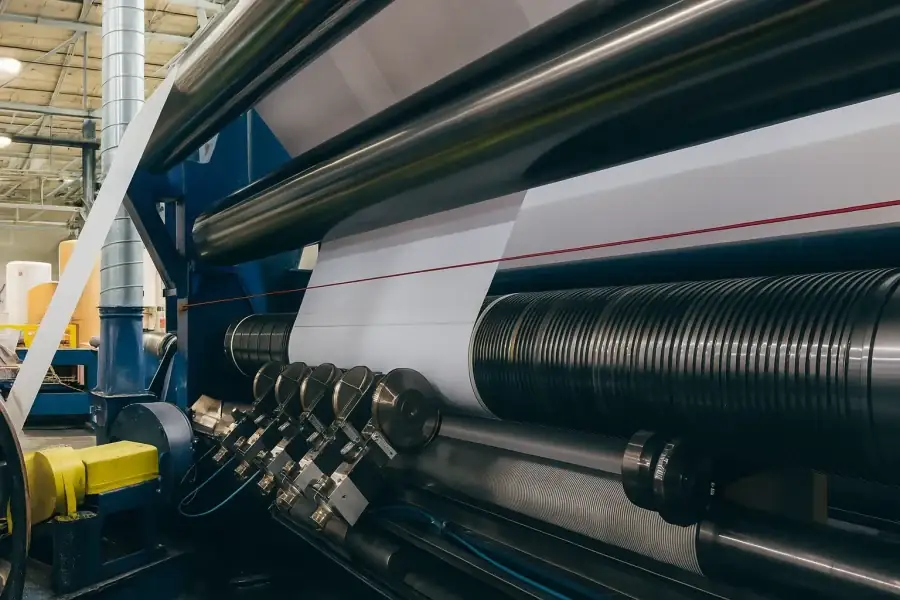
Outsourced Contract Converting vs Buying Equipment: A 2023 Cost and Capacity Guide
Compare outsourced contract converting with in-house equipment investment using real operational constraints: lead time, labor, quality risk, and capital exposure.
Why outsourced contract converting matters for commercial growth
Operations and finance leaders in packaging, paper, and specialty materials increasingly treat outsourced contract converting as a revenue protection decision, not only an operations task. Capital budgets are tight while customer demand requires faster response, tighter tolerances, and less schedule volatility. When lead times stretch or quality variance rises, sales teams lose confidence in promised dates, procurement teams escalate expedite requests, and margin erodes quietly through rework, freight premiums, and avoidable handling.
Outsourcing specific converting lanes can release cash, stabilize output, and improve service-level performance without waiting for long equipment procurement cycles. For organizations serving demanding customers, strong execution in this area builds trust that translates into repeat volume and longer-term account stability. Northeast programs often face expensive expedite freight and compressed delivery windows, so execution consistency carries direct financial impact. In the Northeast, speed and predictability often decide who wins the order, especially when programs are schedule-sensitive or capacity-constrained.
Where programs usually break down
Most teams do not fail because strategy is missing; they fail because day-to-day execution gets fragmented across disconnected vendors, manual handoffs, and reactive scheduling. Even technically strong facilities can lose performance when communication loops are slow and data is not synchronized between production, warehousing, and outbound logistics.
The Bengal Group sees recurring patterns across converting and logistics engagements. Identifying these pressure points early gives teams a practical way to reduce disruption before it impacts service levels or customer commitments.
- Over-reliance on one in-house machine lane creates a single point of failure
- Labor constraints reduce usable capacity even when equipment appears available
- Unplanned downtime forces high-cost schedule reshuffling
- Inventory imbalances increase storage cost and emergency shipments
- Capital approvals delay response to immediate demand opportunities
Operational framework The Bengal Group recommends
High-performing programs standardize execution before volume ramps. That means defining substrate requirements, quality thresholds, packaging rules, and reporting cadence up front so production and logistics teams are aligned from day one.
The Bengal Group applies a staged framework that keeps accountability clear while preserving flexibility for changing demand. The goal is to create stable throughput without forcing your team into rigid workflows that cannot adapt when priorities shift.
- Separate baseline recurring volume from surge and variable-demand volume
- Define quality and tolerance requirements before selecting lane ownership
- Outsource lanes where flexibility and speed matter most
- Tie converting output to warehousing and outbound planning from day one
- Review cost-to-serve monthly using real freight and rework data
KPIs that show whether the strategy is working
A reliable strategy needs measurable outcomes. Teams should track metrics that connect directly to customer impact, operating efficiency, and financial performance. Monitoring only machine uptime or warehouse occupancy can miss the real signal if delivery reliability is declining.
Bengal encourages KPI reviews that combine converting quality, inventory flow, and shipment performance so management can see where constraints are developing before they become customer issues.
- On-time in-full delivery rate
- Cost per converted ton or roll-equivalent
- Rework and scrap percentage by material family
- Expedite freight as a share of total outbound spend
- Average lead time from order release to shipment
Implementation with The Bengal Group
Implementation succeeds when intake is detailed and execution ownership is explicit. The Bengal Group’s model is built to move quickly from discovery to dependable production cadence while maintaining transparency on inventory status and outbound timing.
Programs can start with one lane and scale as confidence grows. Because The Bengal Group combines custom contract converting, warehousing, cross-docking, and distribution support, teams avoid many of the communication gaps that occur when those functions are split across separate providers.
- Scope high-impact product families first
- Run a pilot lane with KPI baseline tracking
- Standardize reporting cadence for operations and finance
- Expand lane coverage once service levels stabilize
- Quarterly review of make-vs-buy mix based on market demand
Decision checklist before kickoff
Before selecting a converting and logistics partner, confirm the execution details that most affect your customer commitments. A strong onboarding checklist reduces avoidable surprises and shortens the path to stable results.
- Do we know which volume is stable versus volatile?
- Are required tolerances documented and measurable?
- Can our current team support multi-shift scaling without quality loss?
- Do we have contingency options for downtime events?
- Will integration with warehousing and shipping be managed in one workflow?
When does outsourcing converting make the most sense?
Outsourcing is often strongest when demand is variable, lead times are compressed, or internal labor and machine availability cannot reliably protect customer commitments.
Does outsourcing reduce quality control?
Not when quality expectations are clearly specified and measured. Strong partners run repeatable checks and provide structured reporting aligned to your requirements.
Can we outsource only part of our converting volume?
Yes. Many teams keep core baseline volume internal and outsource surge or specialty lanes to improve responsiveness and reduce risk.
Request a Converting Quote
Send your material, incoming dimensions, required output, approximate quantity, and delivery date. We will review the job and confirm what is needed to prepare a quote.
Still working out the specifications? Tell us what your production line needs and which details are available.
- Sheeting for paper and paperboard production
- Slitting and rewinding to your required roll format
- Material and equipment fit reviewed before scheduling
For an urgent request, call 610-245-5900.
Based in Royersford, Pennsylvania. Serving converting programs across the Northeast United States and Eastern Canada.