
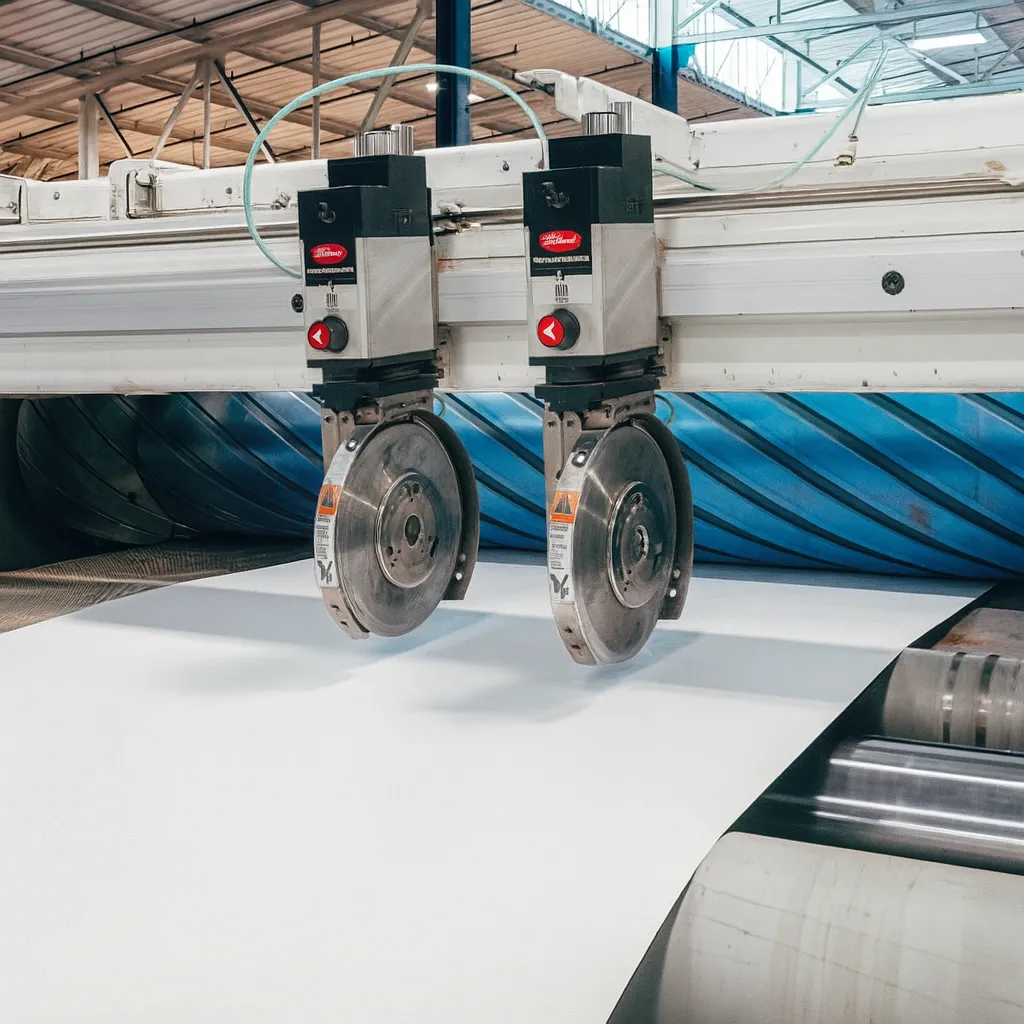
Slitting vs. Rewinding vs. Sheeting
Choose the converting operation for your finished material: narrower rolls, a different roll configuration, or individual sheets.
Let the required output choose the process
Slitting, rewinding, and sheeting describe different changes to a web of material. A job may need one operation or a combination. Start with what must feed the next machine, then compare it with the material you have.
Slitting changes the width
Slitting divides a wider web into narrower widths. A parent roll can yield multiple finished rolls, subject to the machine, material, slit pattern, and trim requirements. Provide each required width, quantity, and tolerance.
For example, a roll-fed line that needs several narrower widths from one incoming width generally calls for slitting with rewinding. The proposed slit pattern must still account for trim and available slitter positions.
Rewinding changes the roll configuration
Rewinding transfers material onto a new roll. It may be used with slitting or to address a required core size, length, diameter, or winding arrangement. Width alone does not define the job. Share the incoming and outgoing core dimensions, roll diameters, winding direction, and any restrictions on splices.
Ask the converter to confirm how the material should be wound for the receiving equipment. Coated, printed, or treated sides can make orientation especially important.
Sheeting produces individual sheets
Sheeting cuts the web into sheets for downstream use. Specify width, cut length, grain direction, dimensional tolerances, stack or pallet configuration, and the material grade. It does not mean the sheets are printed or die-cut.
Bengal reviews all three operations for compatible paper, board, and other substrates. Send the current material format and the finished requirement if you are unsure which process to request.
Request a Converting Quote
Send your material, incoming dimensions, required output, approximate quantity, and delivery date. We will review the job and confirm what is needed to prepare a quote.
Still working out the specifications? Tell us what your production line needs and which details are available.
- Sheeting for paper and paperboard production
- Slitting and rewinding to your required roll format
- Material and equipment fit reviewed before scheduling
For an urgent request, call 610-245-5900.
Based in Royersford, Pennsylvania. Serving converting programs across the Northeast United States and Eastern Canada.