
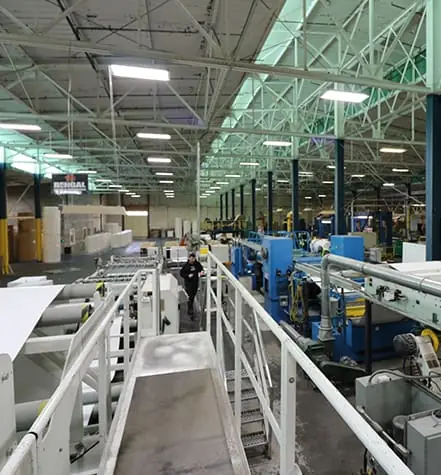
Convert paperboard rolls into sheets for your operation
Bengal provides custom paperboard sheeting for folding carton, print, and packaging production. Send the paperboard grade, caliper, parent-roll dimensions, required sheet size, and quantity for a feasibility review. The team will confirm equipment fit and discuss the output your receiving operation needs.
If a press layout or drawing defines the sheet, include it with the request. Mark grain direction, trim allowances, and any coating or print-side requirements so the specification is clear before setup.
Review the two Marquip sheeter ranges
The machine matrix lists two Marquip sheeters with maximum finished outputs of 65 × 80 inches and 59 × 70 inches. It also lists different parent-roll width and minimum-output limits. Review one complete machine column rather than combining the largest specifications from both.
Material grade, incoming dimensions, finished size, and required tolerances must be assessed together. Ask the team to confirm a proposed size before ordering or shipping stock.
Agree the sheet acceptance requirements
Specify the required width, length, squareness, grain orientation, and allowed variation. Explain the receiving equipment and any issues you need to avoid, such as a layout mismatch or inconsistent stack handling.
- Current material grade and caliper.
- Parent roll width, diameter, core size, and available quantity.
- Finished sheet width × length and marked grain direction.
- Pallet dimensions, stack height, unit weight, labels, and wrapping.
Plan the release around production
Provide the required delivery date and the quantity needed first. For recurring work, include expected release frequency. Optional storage can support scheduled releases after the converted material has been approved.
Request a sheeting quote with the details already available. The team will identify any missing information before confirming price and timing.