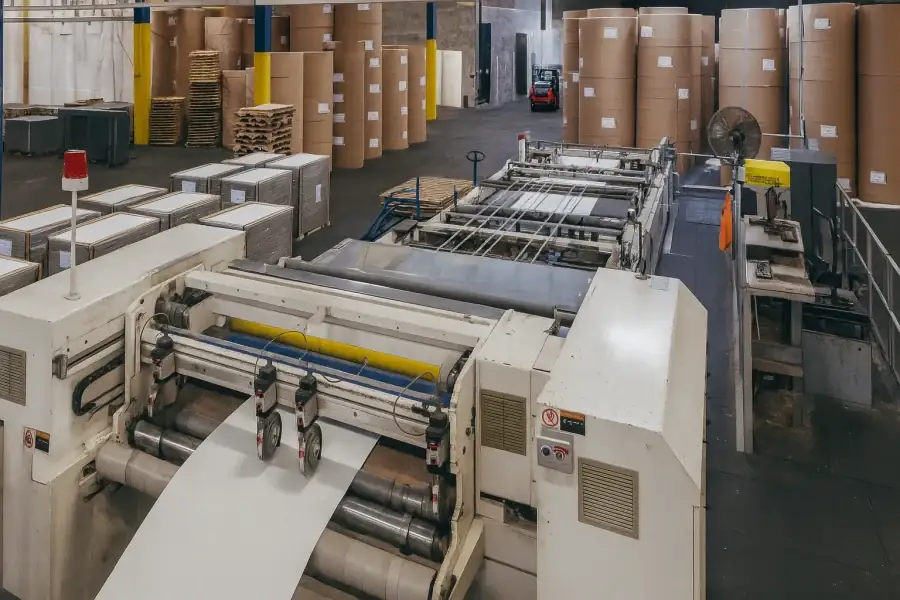
Paperboard in the format your production line needs
A parent roll that fits your purchasing plan may still need converting before it fits your press or packaging line. Bengal sheets, slits, and rewinds paperboard to an agreed output specification at its Royersford, Pennsylvania facility. Bring the grade, caliper, incoming dimensions, and finished format so the team can review the right process.
For folding carton and print programs, start with the sheet layout and grain direction required by the downstream operation. For roll-fed production, start with slit widths, core size, finished diameter, and unwind direction. These two routes require different setup information; a description of the finished application helps resolve the choice.
Choose sheeting or roll converting
Sheeting cuts a continuous web into individual sheets. Slitting divides a wider web into narrower widths, while rewinding transfers the material onto finished rolls. A job may combine slitting and rewinding. The process should follow the required finished format, rather than the format that happens to be easiest to buy.
- Sheet output: width, cut length, grain direction, squareness, and pallet requirements.
- Roll output: slit pattern, core inside diameter, roll diameter or length, and winding direction.
- Either format: grade, caliper, coating or print side, quantity, and delivery date.
Check the equipment against the complete specification
Bengal operates two Marquip paperboard sheeters and five rewinders. The published sheeter matrix lists maximum outputs of 65 × 80 inches and 59 × 70 inches on different machines. Rewinder capacity reaches 143 inches of parent width on one machine. Individual machine limits apply; the largest values across the matrix cannot be combined into a single assumed capability.
Ask the team to confirm incoming roll width and diameter, output dimensions, material behavior, and packaging together. Required tolerances and coating protection should be agreed before production, particularly when a new grade is involved.
Prepare a paperboard converting request
Include an existing specification sheet if one is available. If only part of the job is defined, explain the receiving equipment and the problem you need to solve. Bengal can review the missing details with you before quoting.
Optional storage and scheduled releases can support a converting program after the finished material is approved. Discuss those requirements after the converting specification and delivery priorities are clear.