
Build a converting program around your demand
High-volume paper converting needs a defined output and a workable release schedule. Bengal reviews recurring production, overflow volume, and time-sensitive orders at its Royersford, Pennsylvania facility. Tell the team how much finished material your line needs, in which formats, and on which dates.
Separate the initial release from total program demand. Include material availability and the date the first usable quantity must arrive. This helps the team assess whether a staged converting and shipping plan fits the job.
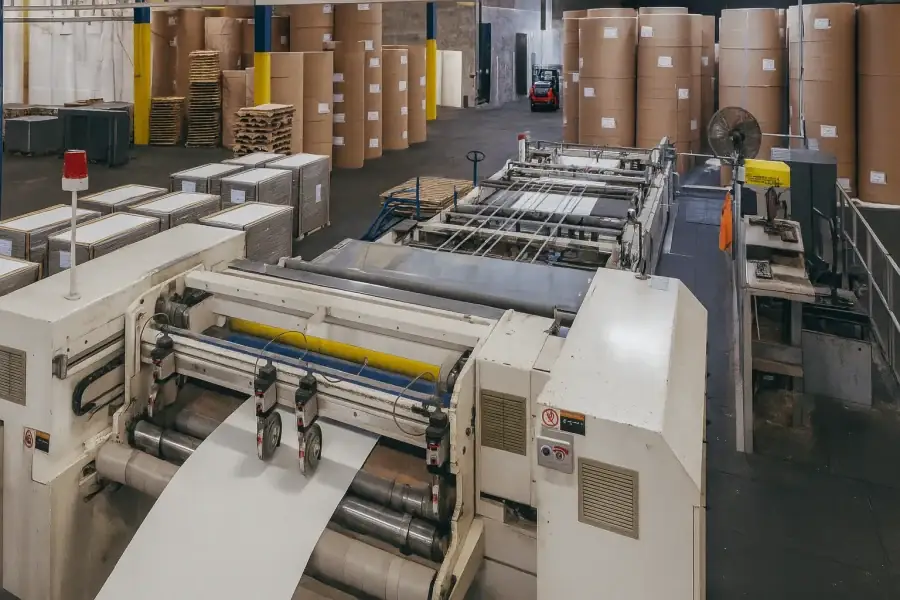
Two Marquip sheeters and five rewinders
Bengal’s sheeters prepare paperboard sheets for downstream print and packaging operations. The matrix lists maximum outputs of 65 × 80 inches and 59 × 70 inches on different machines. Five rewinders support a range of roll configurations, with a maximum parent width of 143 inches on one machine.
Each machine has separate width, diameter, core, and output limits. Review your complete specification rather than selecting a machine by its largest listed dimension. Material handling, tolerances, packaging, and the current schedule also need confirmation.
Keep recurring orders consistent
Start with an approved input and output specification. Identify who authorizes releases, how revisions are communicated, and which checks determine acceptance. If a new material or format needs a trial, agree the sample quantity and approval process before the main order.
- Material designation, grade, caliper, and incoming roll dimensions.
- Finished sheet or roll dimensions, grain or winding direction, and core requirements.
- Firm orders, forecast demand, first release, and subsequent shipment dates.
- Quantity reporting, roll or pallet identification, and packaging instructions.
Add storage and releases when the program needs them
Bengal offers warehousing, cross-docking, and distribution alongside converting. Incoming rolls and finished material can be considered in one handling plan when storage or scheduled releases are required. Confirm inventory identification, release authorization, and receiving requirements with the team.
Send your proposed demand schedule and material specifications for a capacity review. Production operates around the clock; individual job start dates and delivery commitments are agreed after scope and availability are confirmed.